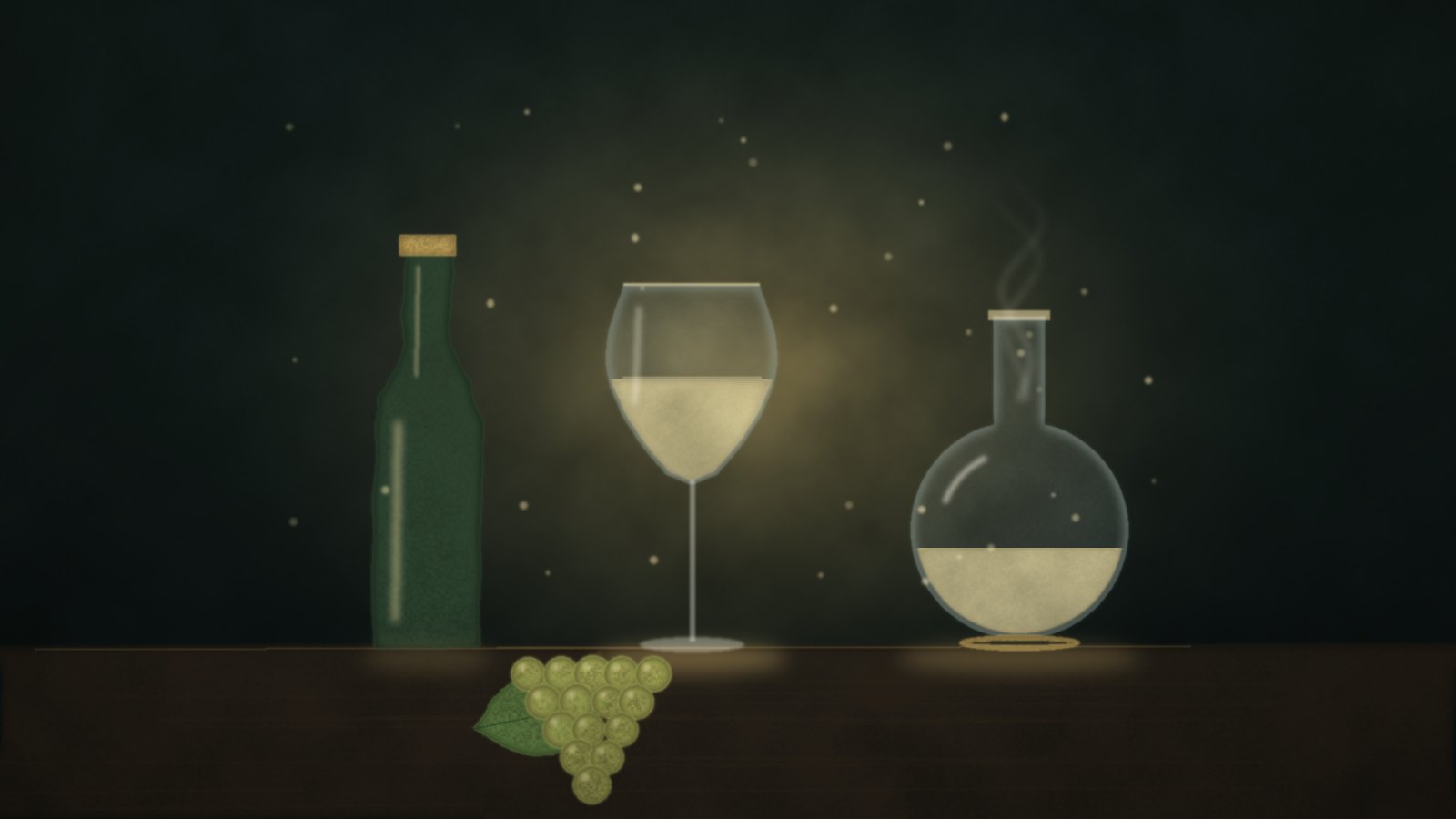
Dealcoholised wine, partially dealcoholised wine, dealcoholised beer: these terms describe a specific family of drinks that start life as ordinary fermented drinks before the alcohol is taken out. This guide explains what a dealcoholised drink is, how the alcohol is removed, what the rules say in the EU and the UK, and how to recognise these products on the shelf.
What is a dealcoholised drink?
A dealcoholised drink is a fermented drink, such as wine, beer or cider, from which some or all of the alcohol has been removed after production. It is first made like a conventional alcoholic drink, then goes through a physical step that separates out the ethanol.
During fermentation, yeast turns the sugars in grapes, malt or apples into alcohol and carbon dioxide. Fermentation also creates part of the drink's aroma compounds. Dealcoholisation aims to remove the alcohol while keeping as much of those aromas, the colour and the acidity as possible.
A dealcoholised drink therefore differs from two other families: drinks that have never fermented, such as grape juice or soft drinks, and drinks whose fermentation has been deliberately restricted so that they produce very little alcohol.
How is alcohol removed from a fermented drink?
Three families of physical processes are used. For wine, they are the only ones allowed under EU rules, alone or in combination.
- Partial vacuum evaporation: lowering the pressure lets alcohol evaporate at a temperature well below the roughly 78 °C needed at normal atmospheric pressure, which limits the effect of heat. Spinning cone columns belong to this family.
- Membrane techniques: reverse osmosis pushes water and alcohol through a very fine membrane; the alcohol is then separated from that fraction and the water is returned to the rest of the drink.
- Distillation: alcohol is separated by evaporation and condensation, usually at a low temperature thanks to reduced pressure.
The most volatile aroma compounds can be lost along with the alcohol. Depending on the equipment, they may be captured at the start of the process and added back to the dealcoholised drink, within the limits set by the rules.
Beer: dealcoholisation or restricted fermentation?
Brewers have two routes. The first is dealcoholisation after brewing, by vacuum evaporation or by membrane techniques such as reverse osmosis or dialysis. The second is to produce little alcohol from the outset: fermentation stopped early, or yeasts that cannot ferment maltose, the main sugar in wort.
Beers made the second way are not, strictly speaking, dealcoholised. Some brewers combine both approaches, and the label does not always say which process was used.
Does dealcoholisation change the taste?
Yes, to some extent. Alcohol contributes to body, to a sensation of warmth and to the release of certain aromas. Removing it therefore changes the balance of the drink.
A dealcoholised wine generally has less body, and its acidity stands out more than in the original wine. The differences depend on the process, the treatment temperature and whether volatile aromas are recovered. On wines, the ingredients list may show any added ingredients.
What do EU rules say about dealcoholised wine?
Since Regulation (EU) 2021/2117, dealcoholised wine has been one of the grapevine products recognised in EU law. Two terms currently apply to still, sparkling and semi-sparkling wines.
- 'De-alcoholised': an actual alcoholic strength of no more than 0.5% ABV.
- 'Partially de-alcoholised': above 0.5% ABV but below the minimum strength of the original wine category.
Wines with a protected designation of origin (PDO) or protected geographical indication (PGI) can only be partially dealcoholised, and only if their product specification allows it, so a fully dealcoholised wine cannot carry a protected name. A drink made from unfermented grape juice cannot be called 'dealcoholised wine' either.
Which terms will apply from September 2027?
Regulation (EU) 2026/471, in force since 18 March 2026, harmonises these terms. Its new labelling rules will apply to wines from 19 September 2027.
- 'Alcohol-free' for wines of no more than 0.5% ABV, with the option of adding '0.0%' up to 0.05% ABV.
- 'Reduced alcohol' for wines above 0.5% ABV whose strength is at least 30% below the minimum for their category.
- A statement that the product was produced by dealcoholisation, for all the wines concerned.
Wines labelled under the current rules before that date may stay on sale until stocks run out.
What about the UK?
The EU rules on dealcoholised wine adopted since 2021 do not apply in Great Britain. UK government guidance reserves 'alcohol-free' for drinks of 0.05% ABV or less and uses 'de-alcoholised' for drinks from which alcohol has been extracted, up to 0.5% ABV. A change to these descriptors has been consulted on, so check the current guidance before relying on a threshold.
Which drinks can be dealcoholised?
- Wine, whether still, sparkling or semi-sparkling, white, rosé or red: the most closely regulated category under EU law.
- Beer, where dealcoholisation sits alongside restricted fermentation.
- Cider and other fermented fruit drinks, using the same families of processes.
Alternatives to spirits often follow other methods: maceration, infusion or distillation of plants, spices and citrus, with processes that vary from one producer to another. Our alcohol-free spirits page covers that family, and the low alcohol drinks section covers wines and beers that keep part of their alcohol.
How can you spot a dealcoholised drink on the label?
A few details reveal both the process and the actual alcohol content.
- The product name: 'de-alcoholised wine', 'partially de-alcoholised wine', 'alcohol-free beer'. For wine, the term accompanies the name of the category.
- The alcoholic strength: often stated, sometimes in the form 'alc. < 0.5% vol.'.
- The ingredients list and nutrition declaration: mandatory in the EU for wines produced since 8 December 2023, they may be partly provided through a QR code.
- The best-before date, which appears on wines below 10% ABV and therefore on dealcoholised wines.
Our guide on how to read an alcohol-free drink label explains each of these details, and our article on alcohol-free vs low-alcohol drinks sets out the thresholds that apply in the UK and across Europe.
💡 Expert Tip
Dealcoholised does not necessarily mean 0%: a dealcoholised wine can contain up to 0.5% ABV. If you need to avoid alcohol entirely, check the exact strength on the label and, if in doubt, ask a healthcare professional.
Conclusion
A dealcoholised drink is a fermented drink whose alcohol has been removed by a physical process: vacuum evaporation, membrane techniques or distillation. For wine, EU law governs both the processes and the terms, which will change in September 2027. The product name and the stated alcoholic strength remain the two details to check first.
To go further, our beginner guides section brings together our introductory articles, and The Edit lets you compare products by category.
Frequently asked questions
Does dealcoholised wine still contain alcohol?
Under EU rules it can contain up to 0.5% ABV. Some products state a lower strength on the label. To know the actual content, rely on the exact figure given by the producer.
What is the difference between dealcoholised wine and grape juice?
Grape juice has never fermented, whereas dealcoholised wine was first made as wine before the alcohol was removed. That is why a drink based on grape juice cannot be sold as 'dealcoholised wine'.
Is alcohol-free beer always dealcoholised?
No. It may be dealcoholised after brewing, made by restricted fermentation, or produced with a combination of both. The label does not always state the method.
Can a PDO or PGI wine be dealcoholised?
Only partially, and only if the product specification for the designation allows it. A fully dealcoholised wine cannot carry a protected designation of origin or protected geographical indication.
Why is dealcoholisation often carried out under vacuum?
At reduced pressure, alcohol evaporates at a low temperature. The drink is therefore exposed to less heat, which could otherwise alter its aromas and colour.
Recommended No-Low Drinks
Products featured in this article
Seedlip Garden 108
A floral blend of hand-picked peas and homegrown hay from the English countryside. The world's first distilled non-alcoholic spirit.
Discover the product
Ghia Le Spritz
A Mediterranean-inspired aperitif made with natural botanicals. Bittersweet with notes of citrus and rosemary.
Discover the productTöst Rosé
A refreshing alcohol-free sparkling beverage with notes of white tea, ginger, and elderberry.
Discover the productRelated Articles
Alcohol-free or low-alcohol drinks: what is the difference?
Alcohol-free, 0.0%, de-alcoholised and low alcohol do not mean the same alcohol content. Here are the thresholds to know and how to read a label.
How Do You Read the Label of an Alcohol-Free Drink?
ABV, ingredients, allergens and nutrition values: an alcohol-free drink label takes a few minutes to read once you know where to look. Here is what each section means.
Understanding Low-ABV Wines: A Beginner's Introduction
The world of low-alcohol wine is more interesting than you think. Learn how they're made, what to expect, and which bottles to try first.