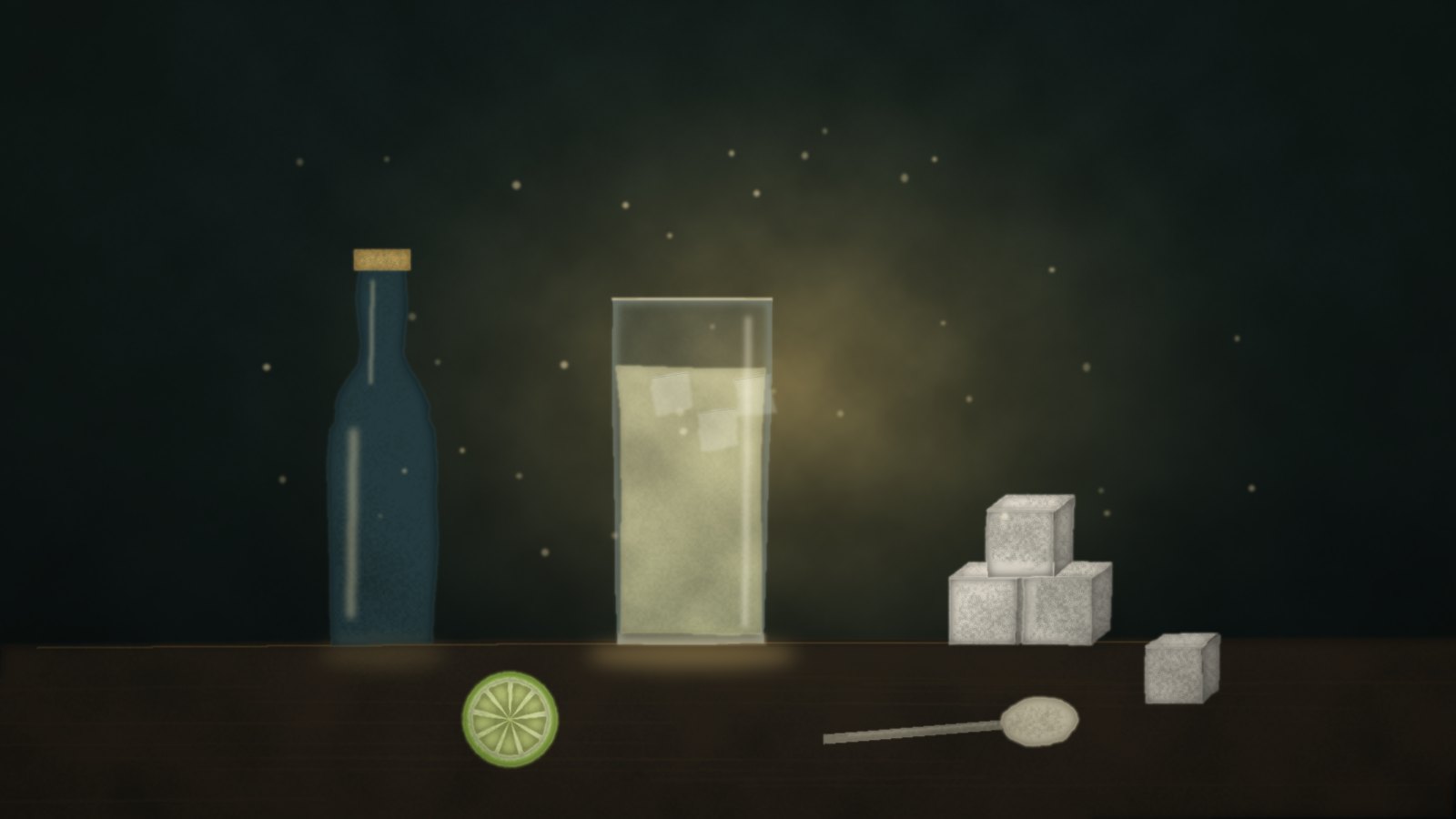
On the alcohol-free shelf, terms such as "0.0%", "sugar-free", "zero sugar" and "no added sugars" often share the same label. They do not measure the same thing. This guide, part of our beginner guides, explains what each term covers, where the sugars in an alcohol-free drink come from and how to compare two products.
Are alcohol-free and sugar-free the same thing?
No. "Alcohol-free" is about ethanol content, expressed as % ABV. "Sugar-free" is about the amount of sugars, expressed in grams per 100 ml. The two are independent and governed by different rules.
Removing the alcohol from a drink does not remove its sugars. Conversely, a drink above 1.2% ABV may not carry any sugar claim (Regulation (EC) No 1924/2006, Article 4). That gives three situations on the shelf:
- Alcohol-free and containing sugars: a regular soft drink, fruit juice, many syrups and ready-to-drink mocktails, but also some alcohol-free beers and de-alcoholised wines, which may contain residual or added sugars depending on how they are made.
- Alcohol-free and sugar-free: plain sparkling water, some cold infusions and drinks made with sweeteners.
- Alcoholic drinks (above 1.2% ABV): they may not carry any sugar claim, and the nutrition declaration is not mandatory for them, so the label does not always show their sugar content.
What does "alcohol-free" mean on a label?
"Alcohol-free" describes a drink whose alcoholic strength does not exceed a threshold set by law or custom, and that threshold varies by product and country.
- In the United Kingdom, current guidance reserves "alcohol-free" for drinks of 0.05% ABV or less, and "low alcohol" for drinks of 1.2% ABV or less; these thresholds are currently under review.
- Across the EU, a "de-alcoholised wine" contains no more than 0.5% ABV.
- The "0.0%" wording is a commercial term used for drinks with less than 0.05% ABV.
- In the EU, drinks above 1.2% ABV are alcoholic drinks and must show their alcoholic strength on the label.
None of these terms says anything about sugar. Our article on alcohol-free vs low-alcohol drinks covers these thresholds and how they differ between countries.
What does "sugar-free" mean under EU and UK rules?
"Sugar-free" is a nutrition claim governed by Regulation (EC) No 1924/2006, which applies in the EU and, as assimilated law, in Great Britain. A drink may only carry it if it contains no more than 0.5 g of sugars per 100 ml. Other sugar claims also have precise conditions:
- "Sugar-free": no more than 0.5 g of sugars per 100 ml.
- "Low sugar": no more than 2.5 g of sugars per 100 ml for a drink.
- "No added sugars": no mono- or disaccharides, or any other food used for its sweetening properties, have been added. If sugars occur naturally, the label must also state "contains naturally occurring sugars".
- "Reduced sugar": at least 30% less sugar than a similar product, with the same or lower energy value.
A marketing phrase such as "zero sugar" has the same meaning for consumers, so it must meet the conditions of the "sugar-free" claim. These claims are optional, though. A drink that carries none of them may contain little or a lot of sugar: only the nutrition declaration tells you.
Sugars, carbohydrates and sweeteners: what is the difference?
Regulation (EU) No 1169/2011 defines "sugars" as all monosaccharides and disaccharides present in a food, such as glucose, fructose, sucrose or maltose. Polyols are excluded. Sugars are part of total carbohydrate, hence the "of which sugars" line under carbohydrate.
Sweeteners are additives that taste sweet but are not counted as sugars. Their presence triggers mandatory label statements:
- "With sweetener(s)", next to the name of the drink, when it contains sweeteners.
- "With sugar(s) and sweetener(s)" when it contains both added sugars and sweeteners.
- "Contains a source of phenylalanine" when aspartame is listed by name, or "contains aspartame (a source of phenylalanine)" when it is listed by its E number.
Where do the sugars in an alcohol-free drink come from?
The sugars in an alcohol-free drink come from its ingredients, from the way it is made or from deliberate addition. The source differs by type of drink:
- Alcohol-free beer: when it is made by stopping fermentation early or with yeasts that cannot ferment maltose, part of the wort sugars is never turned into alcohol and stays in the beer. Beer de-alcoholised after brewing follows a different route.
- De-alcoholised wine: it may keep residual grape sugars. The European Commission also notes that authorised winemaking practices, such as sweetening, remain possible after de-alcoholisation. Our article what is a de-alcoholised drink? explains these processes.
- Alcohol-free spirit alternatives and aperitifs: depending on the recipe, they combine botanical extracts, acids, sugar, juice or sweeteners to make up for the missing alcohol. Our alcohol-free spirits page introduces this category.
- Mocktails, soft drinks and tonics: syrups, juices and sodas provide most of the sugars; some versions use sweeteners instead. Our alcohol-free cocktails section looks at how these drinks are built.
The label does not always say where the sugars come from. The ingredient list remains the best clue: sugar, syrup, concentrated juice or grape must appear there, and their position reflects their share by weight.
How do you compare two drinks on the label?
To compare two alcohol-free drinks, read four pieces of information in this order:
- The alcoholic strength, in % ABV: it shows the alcohol content, and nothing else.
- The "of which sugars" line of the nutrition declaration, per 100 ml: the most reliable basis for comparing two products.
- The ingredient list, in descending order of weight: it shows whether sugars, syrups or juices have been added.
- The "with sweetener(s)" statement and claims such as "no added sugars", whose conditions are set out above.
In the EU and Great Britain, the nutrition declaration is mandatory for drinks of 1.2% ABV or less, as for other foods, with some exemptions (waters, unprocessed single-ingredient products and so on). Our guide on how to read an alcohol-free drink label goes through each section, from allergens to flavourings.
💡 Expert Tip
Always compare values per 100 ml, never per serving: serving sizes vary from brand to brand. If you follow medical advice about sugars, sweeteners or alcohol, ask a doctor or another health professional.
Conclusion
"Alcohol-free" and "sugar-free" are two separate pieces of information: the first concerns alcoholic strength, the second is a nutrition claim reserved for drinks with no more than 0.5 g of sugars per 100 ml. An alcohol-free drink may contain naturally occurring sugars, added sugars or sweeteners. The ABV, the "of which sugars" line and the ingredient list are enough to tell them apart.
To go further, our beginner guides bring together our introductory articles, and the Selections page lets you compare products by category.
Frequently asked questions
Does a "zero sugar" drink always contain sweeteners?
No. Sparkling water or an unsweetened infusion can be sugar-free without any sweetener. If the drink does contain sweeteners, the label must say "with sweetener(s)" next to its name.
Does "no added sugars" mean a drink contains no sugar?
No. The claim only means that no sugar or sweetening food has been added. A fruit nectar or a juice-based drink can carry it while containing naturally occurring sugars, which the label must then mention.
Are polyols counted as sugars?
No. Regulation (EU) No 1169/2011 excludes polyols from the definition of sugars but includes them in carbohydrate. Producers may show the amount on an optional line of the nutrition declaration.
How do I work out the sugar in one glass?
Multiply the "of which sugars" value per 100 ml by the volume served, then divide by 100. For example, a drink with 6 g of sugars per 100 ml provides 15 g in a 250 ml glass.
Does an alcohol-free drink have to show its sugar content?
As a rule, yes: in the EU and Great Britain, the nutrition declaration, which includes a sugars line, is mandatory for drinks of 1.2% ABV or less. The regulation provides some exemptions, for example for waters and certain unprocessed products.
Recommended No-Low Drinks
Products featured in this article
Töst Rosé
A refreshing alcohol-free sparkling beverage with notes of white tea, ginger, and elderberry.
Discover the productGhia Le Spritz
A Mediterranean-inspired aperitif made with natural botanicals. Bittersweet with notes of citrus and rosemary.
Discover the product
Seedlip Garden 108
A floral blend of hand-picked peas and homegrown hay from the English countryside. The world's first distilled non-alcoholic spirit.
Discover the product
Monday Gin
A zero-alcohol gin with juniper, citrus, and botanical notes. Designed for cocktails that taste like the real thing.
Discover the productRelated Articles
How Do You Read the Label of an Alcohol-Free Drink?
ABV, ingredients, allergens and nutrition values: an alcohol-free drink label takes a few minutes to read once you know where to look. Here is what each section means.
Alcohol-free or low-alcohol drinks: what is the difference?
Alcohol-free, 0.0%, de-alcoholised and low alcohol do not mean the same alcohol content. Here are the thresholds to know and how to read a label.
What is a dealcoholised drink?
A dealcoholised drink is a fermented drink from which alcohol has been removed after production. Here is how dealcoholisation works and what the rules say.